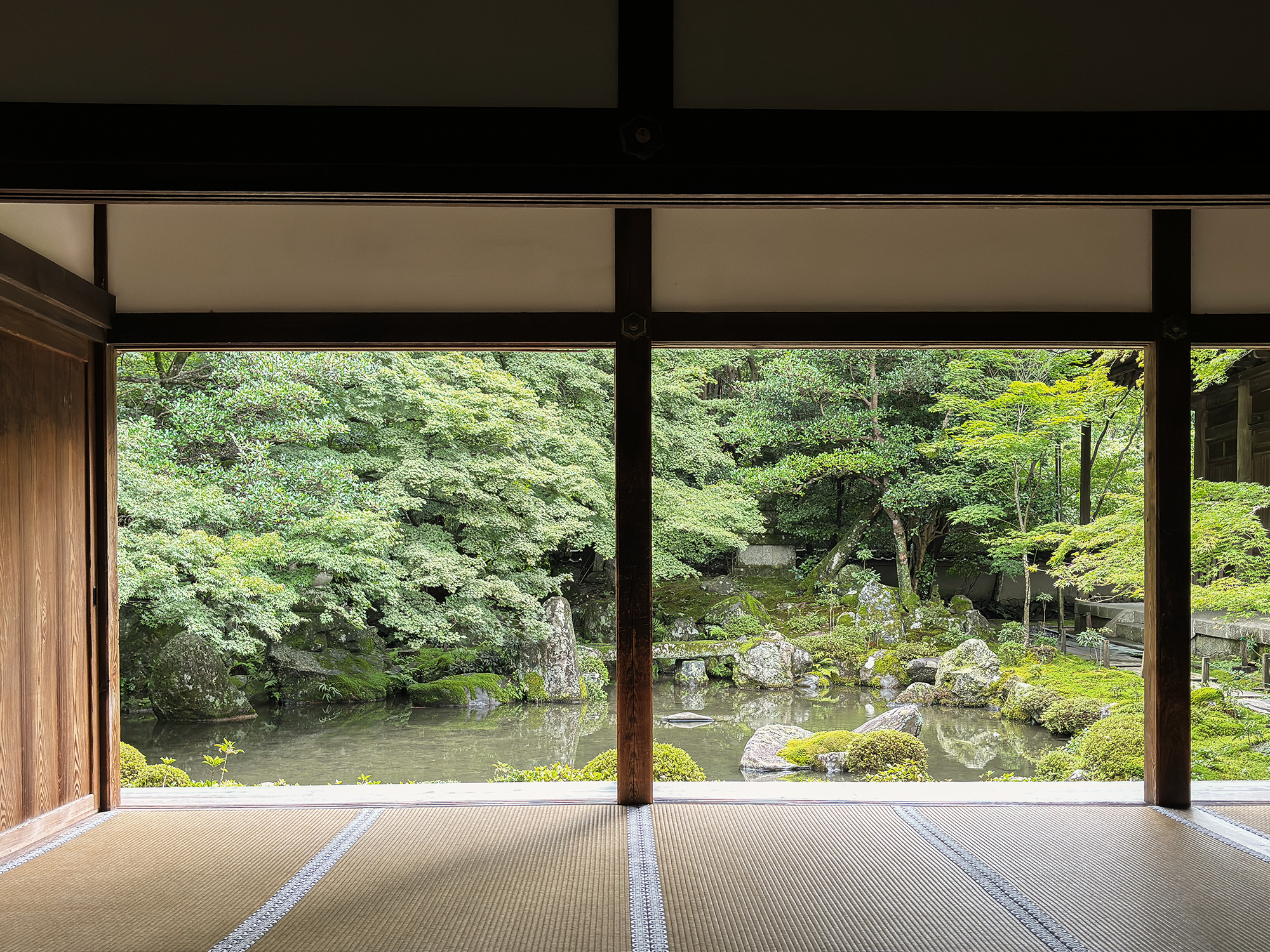
Garden as Landscape Painting
September 2024
In 1964, Tsuyoshi Tamura, who was the first to introduce Japan's oldest garden book “Sakuteiki,” believed to have been written in the late 11th century, through a published work, noted in his book that gardens are essentially an art form created by amateurs using nature. He argued that since garden-making is simpler and more direct than landscape painting, it developed earlier in Japan than landscape painting, and that painters also participated in creating gardens. I remember being struck by this insight.
This is because, having started using natural mineral pigments that were employed in ancient Japanese painting, I’ve come to appreciate their value. For instance, with azurite, the blue pigment, I find myself carefully measuring out only small amounts with a medicine spoon. Since this is still the case today, especially with pigments like lapis lazuli, it gives a sense of how precious and difficult to obtain these pigments must have been in the past.
In comparison, stones, sand, and plants were likely abundant. It is not so unnatural to think that gardens were created using these rich natural materials, as if painting on sliding doors or folding screens and viewing an ideal landscape from an open hall.
In fact, I feel that many Japanese gardens are designed to be best viewed from the center of a hall. Furthermore, gardens where people walk around within them, the many so-called kaiyushiki gardens have several key viewpoints along their paths, each carefully considered to enhance the view. This deliberate design often suggests that these gardens are like pictures.
However, what makes gardens very different from ordinary landscape paintings is that, while they may be based on scenic spots seen somewhere or imaginary landscapes, they are created from nature itself. These gardens change with the seasons, exposed to rain and wind, and maintain their beauty for hundreds of years through the meticulous care of gardeners. Moreover, this landscape painting with depth is not only for viewing but also for people to enter and walk through.
These miniature representations of nature, known as gardens, seem to vividly express how we perceive nature and how we create it in front of us. I have come to think that they also reflect, in a straightforward way, how we live and work on this earth. I continue to be intrigued by their existence, which lies somewhere between imagination and reality.
風景画としての庭
11世紀後半に書かれたとされている日本最古の庭園書「作庭記」を、1964年に書籍としてはじめて紹介した田村剛はその著書のなかで、本来庭とは素人による自然を活用した芸術であって山水画を描くより簡単で直接的であるから、日本では庭づくりが山水画より早く発達し、また画家も庭づくりに参加していたと書いていて、はっとしたことを覚えている。
というのも、画材として古来の日本画で使用されている天然の岩絵具を曲がりなりにも自身で使うようになって、鉱物から採れるそれらの絵の具がどれだけ貴重かを思い知るようになったからだ。とくにアズライトから生み出される群青色などはついつい薬さじでちびちびと使う分だけ取り分けたりして、今でもそうなのだからラピスラズリなどなおさら、昔の人にとって絵の具がどれだけ手に入れにくくとても高価なものだったかは容易に想像できた。
それに比べて石や砂や植物であれば至るところにあったのだろう。これらの豊かな自然の素材を使って、まるで襖絵や屏風絵を描くように、開け放たれた広間から理想の景色を眺めるように庭が作られたと考えるのはそう不自然なことでもない気がする。
実際日本庭園の多くは広間の中心から見るのが一番良いように作られていると感じるし、庭の中を歩き回るような、いわゆる回遊式庭園もその道筋の中でいくつか重要な視座みたいなものがあって、それぞれからの眺めを明らかに意識しているものが多いことは、庭が絵であることを意識させるのに十分であると思う。
しかしながら庭が通常の風景画と大きく異なるのは、どこかで見た景勝地や想像上の風景を題材としながらも、それが自然そのものを画材として、雨風にさらされながら四季を通じて変化し、また庭師たちの多大な手入れを通じて何百年もその美しさを維持している点であると思う。そしてこの奥行きのある風景画は眺めるだけでなく、ときに人が中に入って歩くことができるというところも。
庭といういわばミニチュアの自然は私たちがどのように自然を見ているか、そしてどのように目の前に作り出しているか、それらが如実に表現されているように思えて、また私たちがこの地に生き営む様子が端的に表現されているのではないかと考えるようになった。そして想像することと現実に作り出すことのあいだのようなこの存在に、なぜだろう、とても興味を引かれ続けるのだった。